 LNEYA工業用冷凍機 メーカー サプライヤー


Semiconductor Chillers in Packaging: Boost Reliability and Performance

Recent Blogs
- What Is a Burn In Chamber
- Why Chip Testing Needs Semiconductor Chillers
- Semiconductor Chillers in Chip Testing
- Semiconductor Chillers in Wafer Dicing
- Semiconductor Chillers in Packaging
- How to Upgrade an Old Chiller to Improve Efficiency
- Chiller Tanks Comparison Expansion Tank vs Buffer Tank
- Expansion Tanks in Semiconductor Chillers
Catalog
- 2025年8月
- 2025年7月
- 2025年6月
- 2025年5月
- 2025年3月
- 2025年2月
- 2025年1月
- 2024年12月
- 2024年11月
- 2024年10月
- 2024年9月
- 2024年8月
- 2024年7月
- 2024年6月
- 2024年5月
- 2024年4月
- 2024年3月
- 2024年2月
- 2023年9月
- 2023年7月
- 2023年6月
- 2023年5月
- 2023年1月
Tag
空冷チラー チラー チラーズ コールド・アセンブリー・フリーザー 冷却チラー 冷却暖房サーキュレーター 冷暖房システム cooling water chiller Double-Layer Glass Reactor 動的温度制御システム フッ素系液体温度制御 冷凍庫 ガス冷却チラー 暖房用サーキュレーター industrial chiller industrial cooling industrial freezer 産業用冷蔵庫 jacket reactor 液冷チラー 低温チラー news pharmaceutical chiller process chiller reactor chiller reactor cooling reactor cooling heating 原子炉加熱冷却 reactor system 冷凍サーキュレーター 冷凍チラー スクリューチラー 半導体チラー 半導体テストチラー スンディ TCU 温度調節 試験室 サーモスタット 超低温チラー 車両試験用冷凍機 ウォーターチラー 水冷チラー wtd
お問い合わせ
Semiconductor packaging may look like the “final wrap” of the chip, but in reality, packaging is one of the critical steps that determines reliability, performance, and long-term yield.And here’s the catch—packaging is all about managing heat.
Whether it’s bonding wires, curing underfill, or molding epoxy, temperature control can make or break the process. This is where 半導体チラー come into play. They may not get the spotlight, but without them, most modern packaging lines would struggle to keep yields consistent.
What is Semiconductor Packaging?
Semiconductor packaging is the step where a bare silicon die is turned into a functional chip that can be mounted on a circuit board. Think of it as building a protective housing while also creating the electrical connections between the wafer and the outside world.
Packaging covers a wide range of processes, including:
• Die attach – mounting the chip onto a substrate with adhesive or solder.
• Wire bonding or flip chip – making the electrical connections.
• Encapsulation and molding – covering the chip with protective material.
• Final testing and burn-in – ensuring the device works under stress.
Every one of these steps relies on precise thermal conditions. A little too hot, and materials expand, warp, or crack. Too cold, and adhesives won’t cure properly, and bond strength drops. That’s why fabs invest so heavily in environmental control systems. Packaging is not just about “sealing” the chip—it’s about controlling energy transfer at microscopic levels.
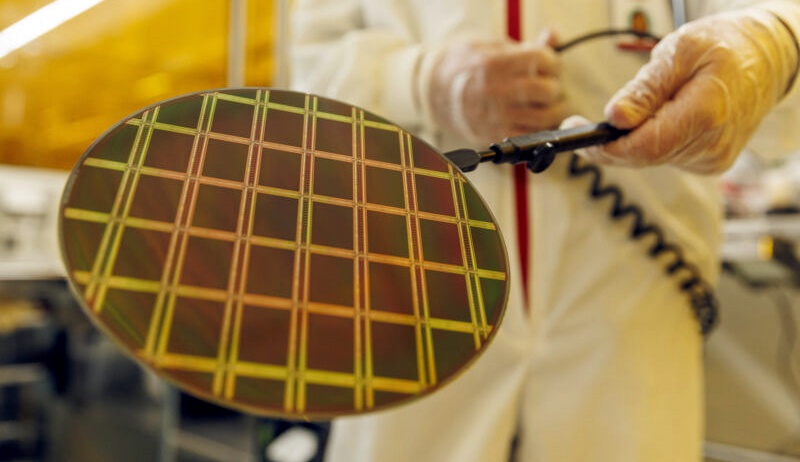
Temperature Challenges in Semiconductor Packaging
If you ask any packaging engineer what keeps them up at night, chances are the answer is “thermal management.” Heat shows up in unexpected ways.
Die Attach
Take die attach, for example. Attaching a chip with epoxy looks simple enough, but the adhesive has a very specific temperature profile. If the heating is uneven, tiny voids form inside the joint. Those voids later become failure points when the chip heats up during real-world operation.
Wire Bonding
Wire bonding is another delicate process. When gold or copper wire is bonded onto aluminum pads, the interface needs just enough heat to create a reliable bond. Too much, and the bond pad lifts off. Too little, and the bond won’t hold through thermal cycling.
Flip Chip Packaging
Flip chip packaging adds even more complexity. Reflow solder bumps are extremely sensitive to both heating and cooling rates. Cooling too quickly can trap stress in the bumps, while cooling too slowly may cause uneven joints.
Molding and Encapsulation
And then there’s molding and encapsulation. Epoxy resins cure through exothermic reactions. As they harden, they release heat. If that heat isn’t pulled away fast enough, the resin cures unevenly, leading to internal stress and package warpage. Even a slight bow in a package can prevent it from being mounted properly on a circuit board later.
These challenges explain why packaging facilities need something far more precise—tools that can hold liquid temperatures within fractions of a degree, 24/7.
Why Semiconductor Chillers Are Essential in Packaging?
This is where semiconductor chillers prove their value. They don’t just “cool things down.” They provide tight, repeatable, and reliable temperature control across multiple packaging stages.
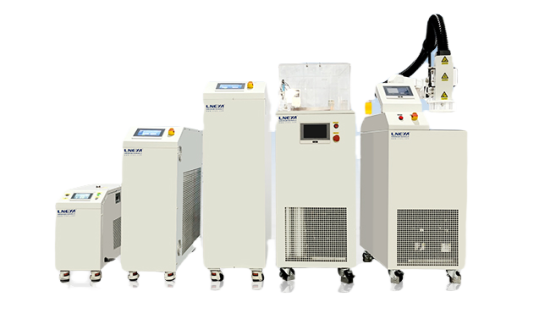
Stable Temperature for Die Attach
During die attach, whether with silver epoxy or solder, the bonding stage requires consistent thermal conditions. A semiconductor chiller ensures the adhesive cures at the right speed and uniformity.
That reduces the risk of voids and improves long-term device reliability. For high-power chips, where die attach quality directly impacts thermal resistance, the role of the chiller is even more critical.
Precision in Wire Bonding and Flip Chip Processes
Bonding machines are sensitive to even the smallest temperature drift. The spindle, bonding capillary, and stage all expand when they heat up. A chiller prevents this drift by keeping the chilled water or stage liquid at a stable temperature. In flip chip, semiconductor chillers regulate reflow profiles and maintain cooling ramps that protect solder joints from cracking.
Cooling During Molding and Encapsulation
In molding, a chiller removes the excess heat generated by epoxy curing. Without precise cooling, packages may warp or show internal cracks. Chillers allow mold presses to operate faster and more consistently, because the cooling step becomes predictable and repeatable. This not only saves cycle time but also improves package flatness.
Supporting Reliability Testing
After packaging, chips undergo reliability tests such as thermal cycling, burn-in, or humidity bias tests. Many of these require rapid temperature shifts. Chillers integrate with thermal chambers to provide stable and repeatable conditions, ensuring that testing results reflect actual product performance.
Investing in Reliable Semiconductor Chiller
Heat is both necessary and dangerous—it enables bonding and curing but threatens yield if uncontrolled. Semiconductor chillers give fabs the stability needed to manage this balance.
They stabilize die attach, keep bonding precise, pull heat from molding processes, and support critical reliability tests. More than that, they help fabs protect their investment in wafers and equipment while ensuring products make it to market without hidden weaknesses.
Contact our team today to explore customized chiller solutions for your fab.
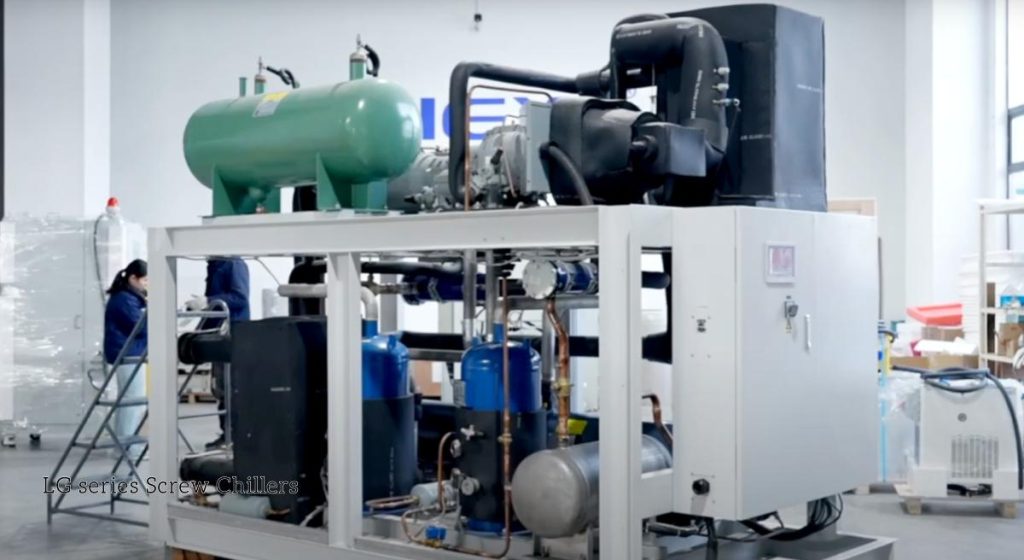
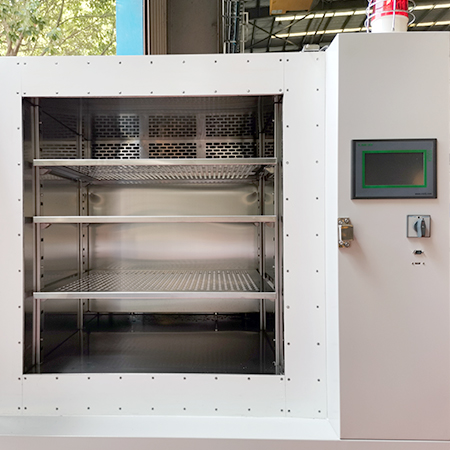
関連冷凍機


お問い合わせ
TEL
EMAIL:
WeChat & WhatsApp:ウィーチャット

ウィーチャットQR

ご質問やお見積りをご希望の場合は、以下のフォームにご記入ください。24時間以内に担当者よりご連絡させていただきます。

